Landscaping
How to Water a Lawn After Aeration and Overseeding
New seed doesn't want more water — it wants constant light moisture. Here's the week-by-week schedule for a freshly aerated and overseeded Colorado lawn.
- Published
- August 15, 2026
- Reading
- 7 min
- By
- BigBoy Builders
The One Rule: Damp, Never Soaked, Never Dry
Aeration and overseeding is the single best thing you can do for a thin Front Range lawn — and watering is where most of these projects quietly fail. Grass seed doesn't need volume; it needs the top half-inch of soil to stay consistently damp from the day the seed goes down until well after germination.
A seed that swells with moisture and then dries out doesn't pause — it dies. One skipped afternoon in a dry Colorado wind can undo the whole project. That's why the schedule below front-loads frequency, not quantity.
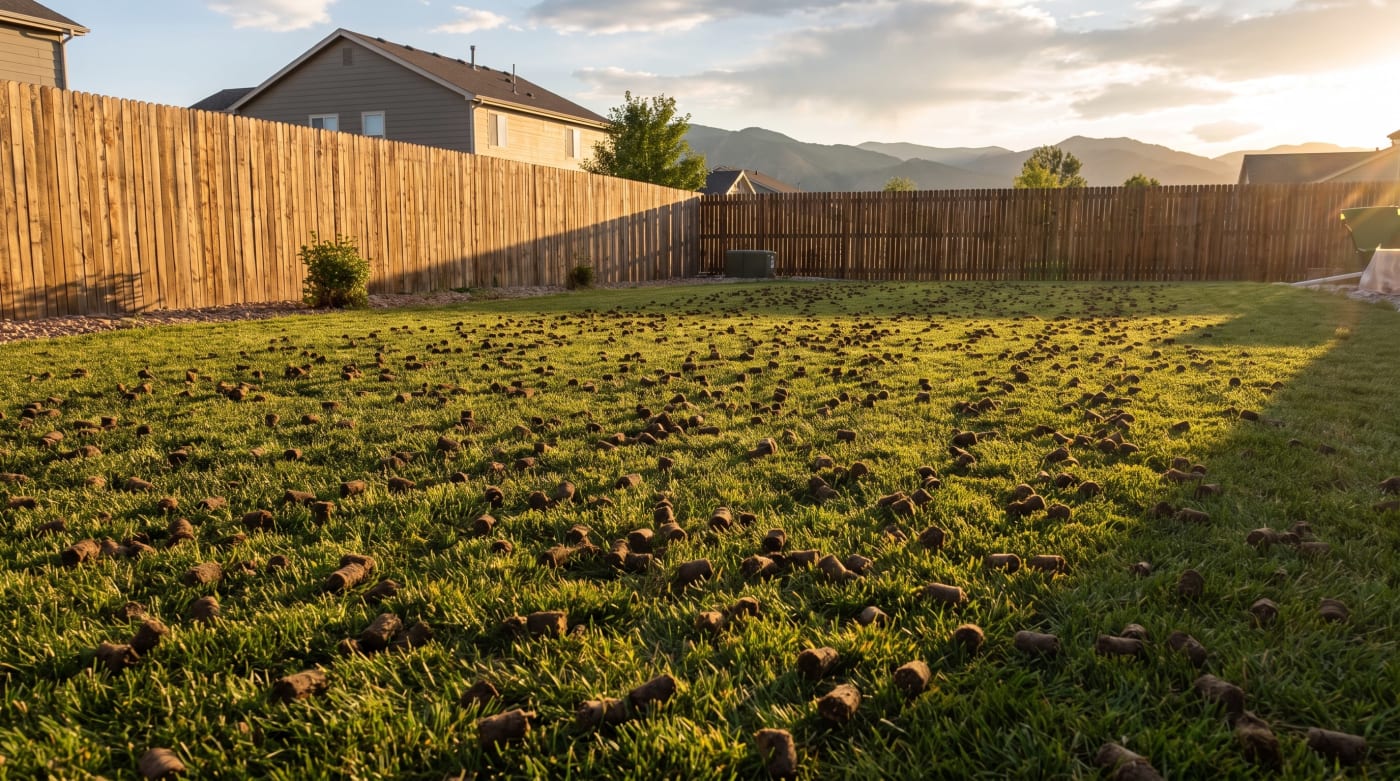
The aeration holes are your friends here: seed that fell into them sits in a tiny sheltered pocket with soil contact on all sides — the highest-percentage germination sites in the whole lawn. Leave the plugs where they lie; they break down in a couple of weeks and return the soil.
The Week-by-Week Schedule
| Phase | How often | How long | What you're doing |
|---|---|---|---|
| Weeks 1–2 (pre-germination) | 2–3 times per day | 5–10 minutes per zone | Keeping the top half-inch constantly damp |
| Weeks 2–3 (germination) | 1–2 times per day | 10–15 minutes per zone | Supporting sprouts whose roots are still shallow |
| Weeks 4–5 | Every other day | 20–30 minutes per zone | Pushing roots deeper as plants toughen up |
| Week 6 onward | 2–3 times per week | Deep soak | Normal lawn watering — deep and infrequent |
Times are starting points — a south-facing slope in September sun dries faster than a shaded north side lawn in October. The test is simple: press a finger into the soil surface. Damp means you're on schedule; dusty means water now.

The Taper Is Not Optional
The biggest mistake after a successful germination is keeping the daily light waterings going. Once seedlings are up and mowed once or twice, shallow frequent water becomes actively harmful: it trains roots to stay in the top inch of soil, where they'll cook next July.
Every week after germination, water less often and longer. By six weeks you should be back to a normal deep-and-infrequent schedule — the same one that keeps mature Colorado lawns alive on a water budget.
- Set irrigation zones to cycle-soak (two short back-to-back runs) if water puddles or runs off before soaking in.
- Hold off on mowing until new grass reaches about 3 inches, and make the first cut with a sharp blade.
- Skip fall weed treatments on newly seeded areas — most products stop grass seed exactly the way they stop weed seed.
- Stay off the lawn as much as practical for the first three weeks; seedlings shear off underfoot.
- Mark the sprinkler heads before aerating. Every fall we replace heads that lost the argument with an aerator.
Questions / Field Notes
Frequently asked questions
Built different.
Need help on your next project?
BigBoy handles aeration, overseeding, sprinkler adjustments, and the controller programming that gets seed through germination.
You talk to the person doing the work.
When it's past DIY
The services this connects to.
Sprinkler & Irrigation Systems
High-performance sprinkler repairs, custom zone installations, smart Wi-Fi controller upgrades, and targeted drip lines designed to lower water bills and keep your lawn lush.
Seasonal Maintenance
Sod Installation & Lawn Rehabilitation
Establish a vibrant, healthy yard from the roots up. We specialize in deep soil preparation, precision sod laying, and strategic planting of native trees, privacy shrubs, and garden beds.
In practice
Where we've done it.
 Before After
Sod Installation & Irrigation Repair
Replaced dead sod with new sod and repaired irrigation system to ensure proper watering. Fully turned over 6 inches of soil and mixed in compost. Repaired festering leak that dropped the pressure. Replaced sprinklers heads. Filed with utility on customer's behalf for permission to use excessive water to help new sod take root.
- Tags
- Lawn, Lawn Renovation, Irrigation
Full Backyard Renovation
Complete backyard renovation, documented on video.
Questions this guide didn't answer?
Give us a shout — if it's outside our lane, we'll say so.